











Combined Client Revenue
Campaigns are separated by purpose, match type, product, targeting method, and stage of growth so performance stays readable.
Converting terms are promoted into stronger structures while irrelevant or expensive traffic is reduced with negatives & bid changes.
ACoS, TACoS, conversion, margin signals, ranking, and budget pacing are reviewed together before scaling decisions are made.



Discovery, ranking, brand defence, and profitable scaling are mixed together, making decisions harder.
Winning queries remain buried in broad or auto campaigns while irrelevant clicks continue spending.
A generic ACoS goal can look efficient while still damaging contribution margin or limiting growth.
Advertising cannot compensate for unclear images, poor positioning, missing information, or weak conversion.

ACoS is rising while total sales or profit remain flat.
The same converting search terms appear across several competing campaigns.
Budgets run out before the strongest buying periods or priority products receive enough coverage.
New products depend on broad automatic traffic without a clear harvesting plan.
Reports show numbers, but no one owns the next bid, budget, keyword, or listing decision.
Review campaign history, search terms, targeting, placements, budgets, conversion, ACoS, TACoS, and margin context.
Separate campaigns by purpose, product, match type, targeting method, brand intent, and growth stage.
Harvest winners, add negatives, adjust bids and placements, control budgets, and identify listing feedback.
Expand proven demand, protect profitability, document changes, and communicate the next decisions clearly.
| Management Area | Self-Managed | Fragmented Support | Sell Insights PPC Management |
|---|---|---|---|
| Target Setting | Often based on a generic ACoS goal | Targets may ignore account-wide margin and growth priorities | Goals are reviewed against margin, launch stage, organic growth, and commercial purpose |
| Campaign Structure | Campaigns expand as problems appear | New campaigns are added without a unified architecture | Discovery, ranking, defence, product targeting, and scale are separated clearly |
| Search-Term Mining | Reviewed inconsistently | Keyword work may stop at a report or software recommendation | Winning terms are promoted and waste is controlled through a repeatable review cycle |
| Bids and Budgets | Changed reactively after spend rises | Different people manage bids, budgets, and placements separately | Bids, pacing, placements, and product priorities are reviewed together |
| Listing Feedback | PPC and conversion are treated separately | Advertising and creative teams use different assumptions | Traffic quality and listing conversion inform the same account roadmap |
| Reporting and Follow-Through | Exports require internal interpretation | Reports explain metrics but not combined decisions | Changes, reasons, owners, and next actions are documented clearly |
Search-term, bid, budget, placement, and pacing reviews
Campaign efficiency, account impact, and product margin context
Clear accountability for the PPC roadmap and follow-through

Structure, bids, placements, targeting, conversion, and margin context are reviewed together.
Irrelevant queries are isolated and negative targeting is used to protect budget quality.
Campaign roles, match types, ASIN targeting, brand terms, and growth stages are organized clearly.
Search-term data, listing relevance, competitors, and buyer intent are used to identify missed demand.
Budgets are prioritized across products and campaigns so valuable traffic is not lost too early.
New-launch campaigns are structured to collect useful data, build visibility, and control early waste.

Identify structural gaps, wasted spend, and the most important next actions.
Repair campaign architecture and create a cleaner base for optimization.
Hand over weekly optimization, scaling, reporting, and implementation ownership.
Build a controlled paid-launch system for a new product or catalog expansion.
The answer should consider margin, launch stage, organic contribution, repeat purchase, and growth purpose—not one generic benchmark.
Advertising data is more valuable when it improves the wider account rather than staying inside the ads console.
A useful report should explain what changed, why it changed, what worked, and what happens next.
Confirm who changes campaigns, checks results, communicates risks, and keeps the roadmap moving.
Find the campaign, query, targeting, placement, and conversion issues consuming budget.
Organize campaign roles, match types, product targeting, budgets, and measurement.
Promote proven search terms, refine bids, add negatives, and strengthen listing feedback.
Increase coverage and budget where demand, conversion, inventory, and profitability support it.
Home & Kitchen Brand
Beauty Brand
Sporting Goods Brand
Amazon PPC is a pay-per-click advertising system where sellers and vendors bid for sponsored placements and pay when a shopper clicks. Common formats include Sponsored Products, Sponsored Brands, and Sponsored Display.
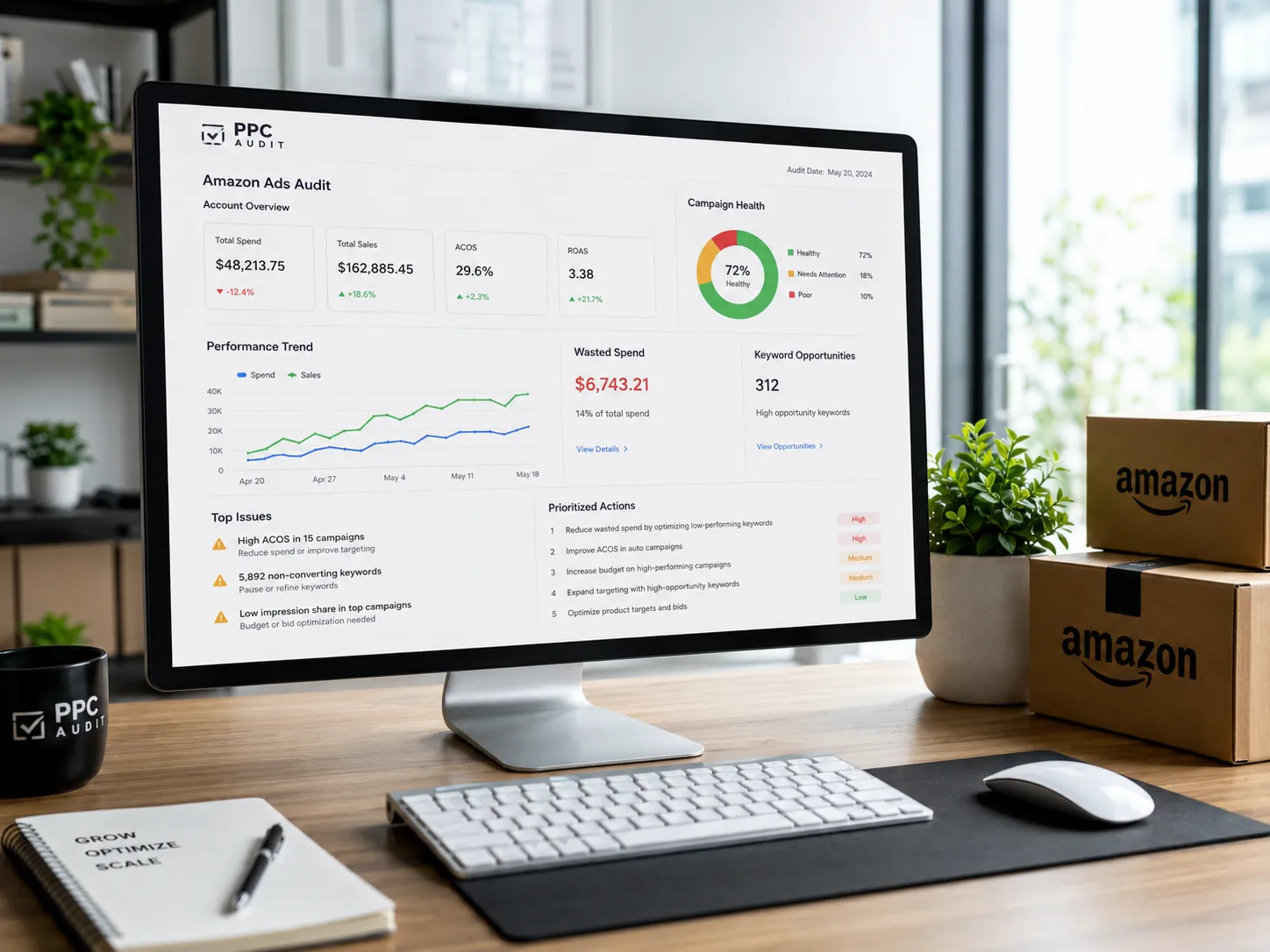
The audit can review campaign structure, search terms, keywords, ASIN targeting, bids, placements, budgets, ACoS, TACoS, conversion, and the most urgent efficiency or growth gaps.
ACoS compares ad spend with ad-attributed sales. TACoS compares ad spend with total sales. Reviewing both helps separate campaign efficiency from the wider impact advertising has on the account.
The timing depends on account history, traffic volume, listing conversion, competition, inventory, and the severity of structural problems. Early efficiency changes may appear quickly, while reliable scaling decisions require enough clean data.
Yes. New Launch via PPC can cover campaign planning, keyword and product targeting, budget control, data collection, search-term harvesting, and the transition from discovery into stronger performance campaigns.
Support can include the main sponsored-ad formats available to the account, with campaign choices based on product stage, brand assets, targeting opportunity, and commercial goals.
Yes. When paid traffic is relevant but conversion is weak, the account may need improvements to positioning, copy, images, A+ Content, offer clarity, reviews, pricing, or inventory rather than another bid change.