












Combined Client Revenue
Main-image choices are built around category context, Amazon compliance, product recognition, and stronger search-result impact.
Gallery images and videos answer buyer questions in a logical order while making key benefits easier to understand.
Listings, A+ Content, Brand Story, ads, and storefront assets share one recognizable visual direction.
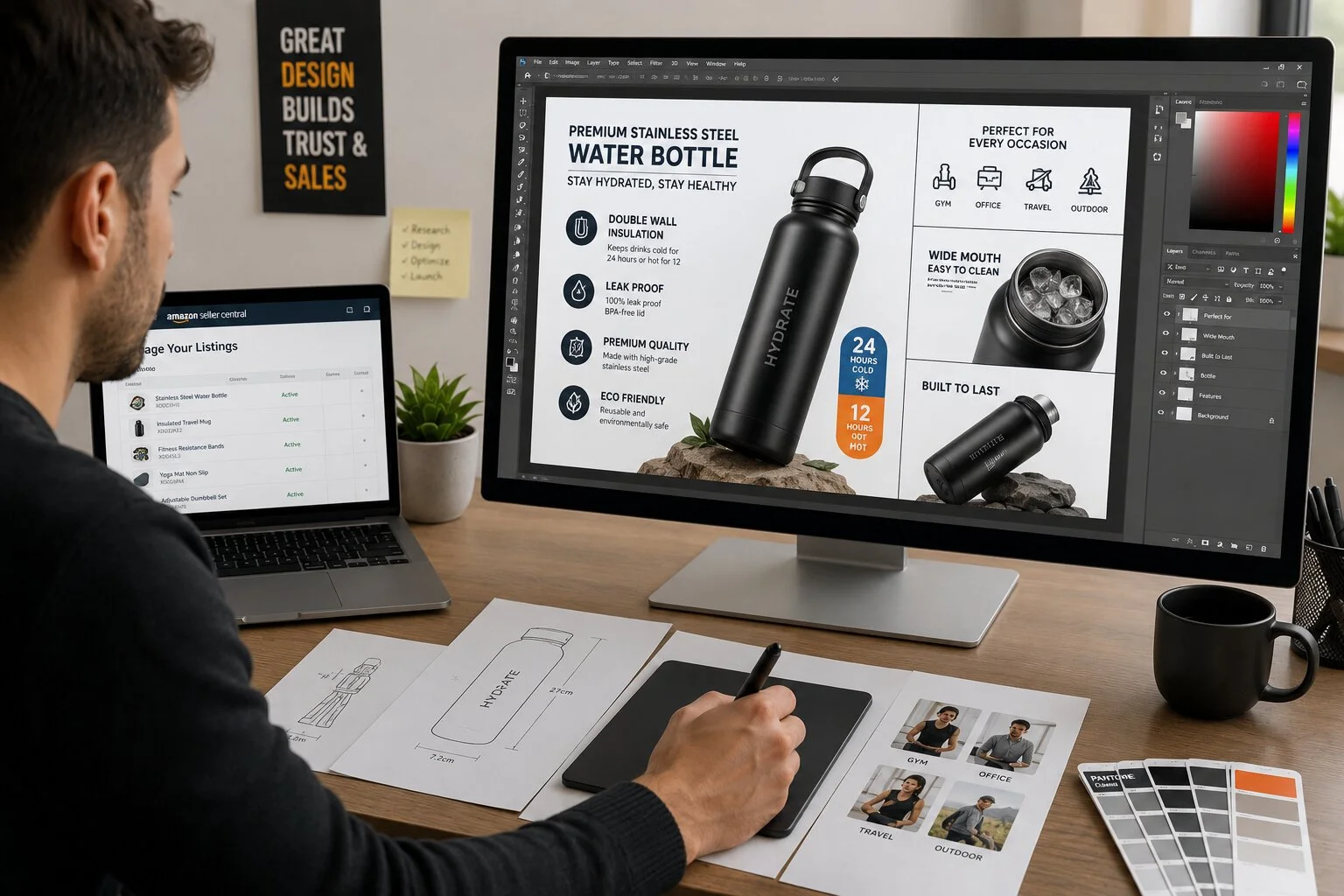
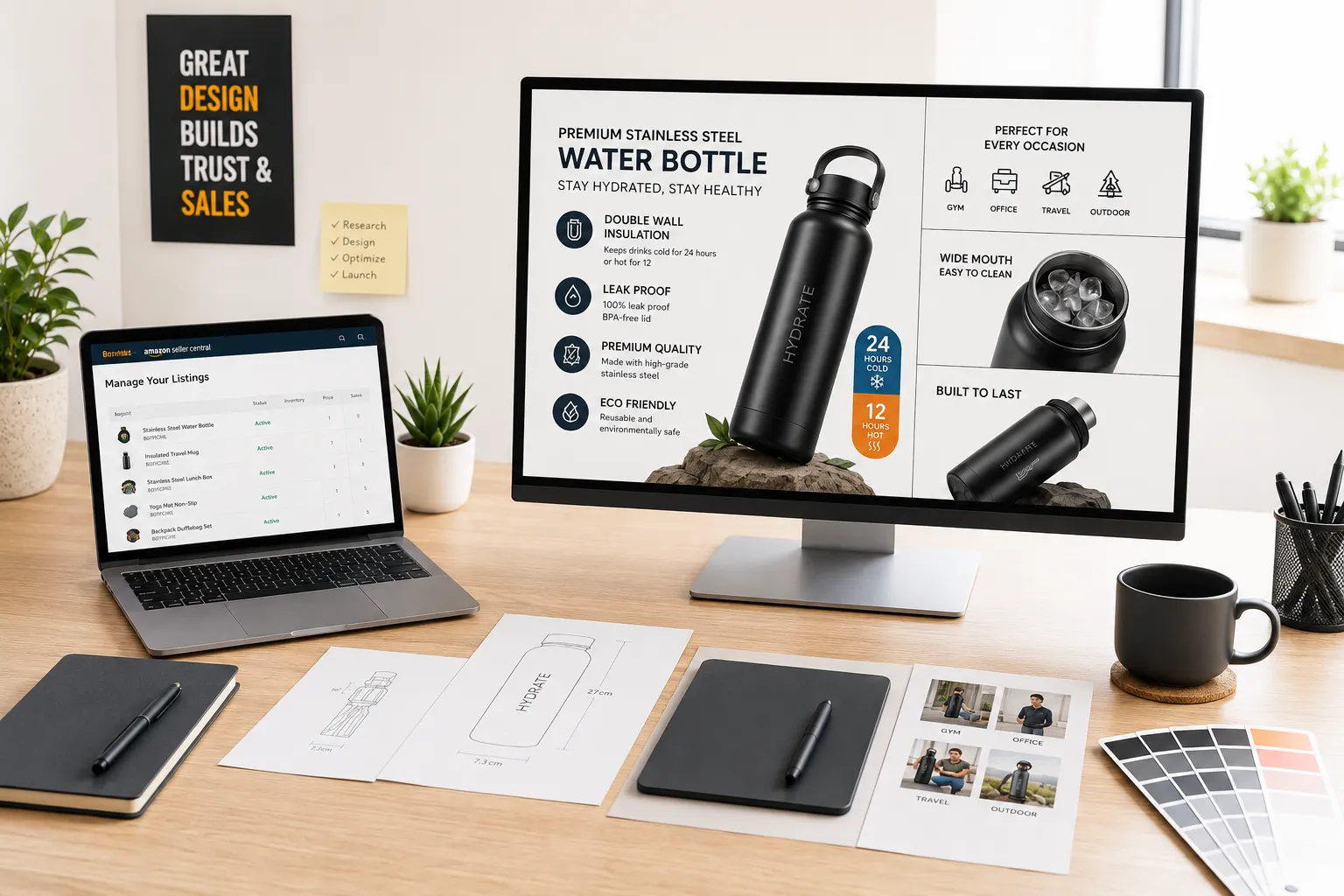







The product is technically visible but lacks the category-aware clarity and impact needed to earn attention.
Images repeat features instead of moving shoppers from recognition to understanding, trust, and choice.
Listings, A+ Content, ads, and storefront pages feel disconnected, weakening recognition and credibility.
Design decisions are based on preference alone instead of CTR, conversion, reviews, returns, and buyer questions.
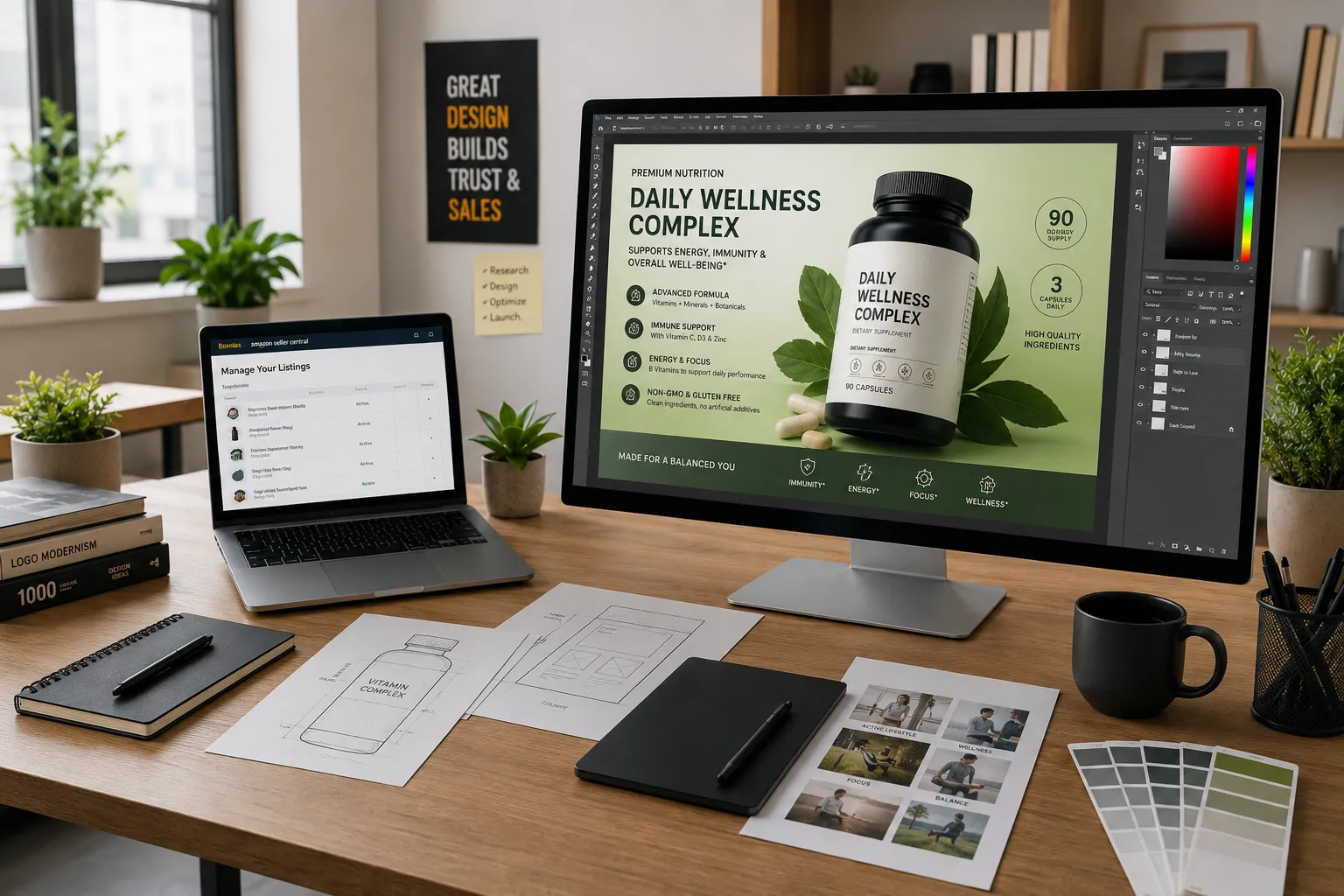
New products are launched without a repeatable creative system
Shoppers ask questions that the gallery should already answer
Relevant PPC traffic reaches the listing but conversion remains low
Your listings, A+ Content, ads, and storefront do not feel like one brand
Your product receives impressions but the click-through rate stays weak
Review competitors, category conventions, reviews, search intent, current assets, and performance signals.
Prioritize benefits, proof, objections, differentiators, use cases, and the visual order shoppers need.
Create concepts, layouts, iconography, image direction, copy hierarchy, and reusable brand rules.
Review for clarity, consistency, Amazon requirements, mobile readability, and implementation readiness.
| Creative Area | Generic Approach | Sell Insights Approach |
|---|---|---|
| Main Image | Uses a standard packshot without considering category context. | Balances compliance, recognition, scale, product detail, and search-result impact. |
| Image Gallery | Repeats product features in disconnected graphics. | Builds a deliberate sequence from benefit and use case to proof, comparison, dimensions, and trust. |
| Listing Video | Creates a brand montage with limited product explanation. | Demonstrates the product, answers objections, and shows the most important reasons to buy. |
| A+ Content | Fills modules with attractive but repetitive layouts. | Extends the listing story, organizes product families, and reinforces differentiation below the fold. |
| Storefront | Acts as a collection of banners and product tiles. | Creates a guided brand and category experience that supports campaigns and cross-selling. |
| Measurement | Relies mainly on subjective design preferences. | Uses CTR, conversion, buyer feedback, reviews, returns, PPC signals, and brand goals to guide revisions. |
Mobile-first readability and visual hierarchy
Consistent brand rules across every asset
Clear product truth without unsupported claims
Category context, product scale, packaging, angles, composition, and competitor presentation are reviewed.
Visuals are reorganized so each image has a clear role and shoppers receive information in the right order.
Features are translated into practical outcomes, use cases, proof points, and understandable visual comparisons.
Text density, font scale, contrast, cropping, and visual hierarchy are improved for smaller screens.
A consistent design language is built across listings, A+ Content, Brand Story, ads, and storefront pages.
Repeatable briefs, message maps, templates, approvals, and asset systems reduce delays across larger catalogs.
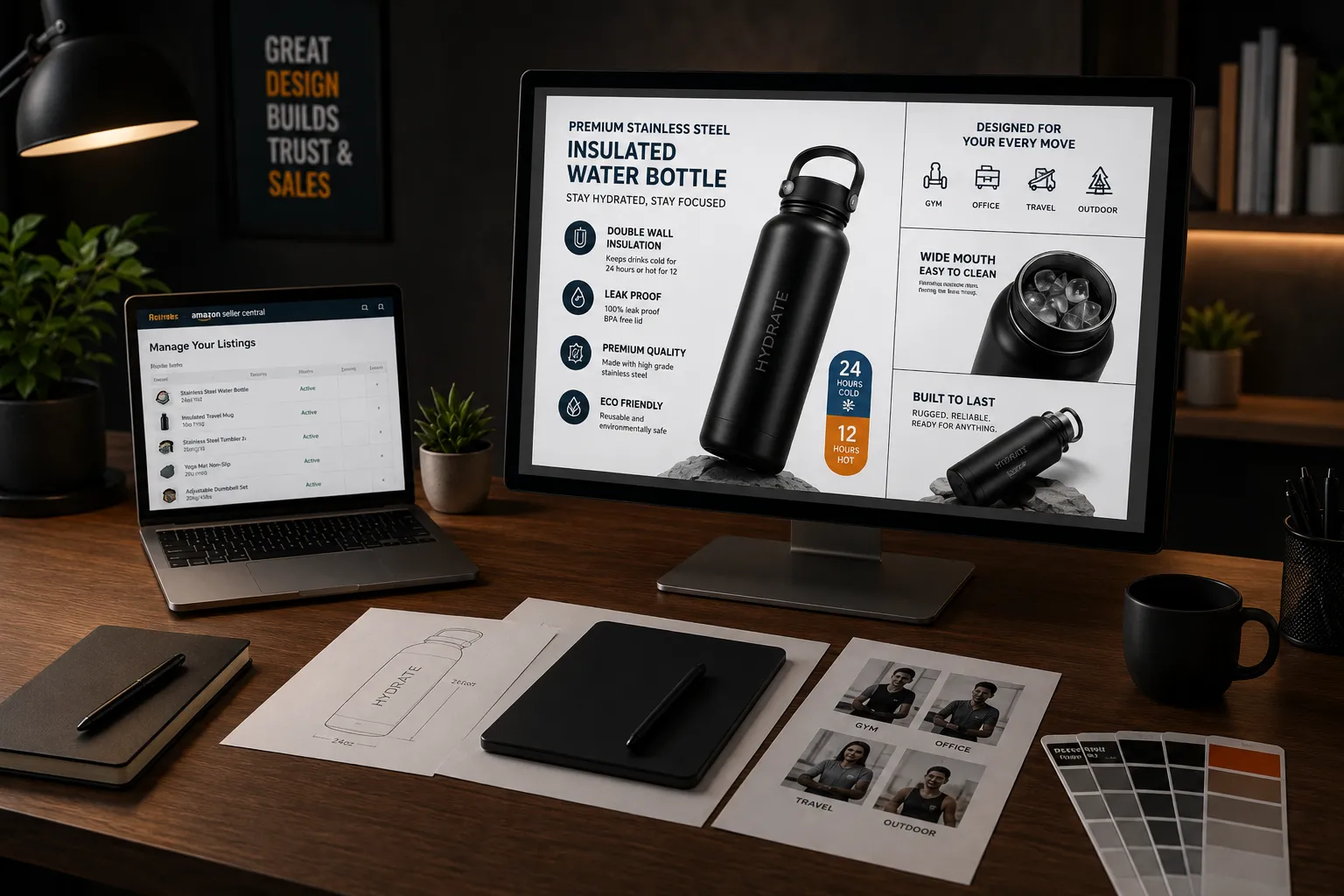
Assess search-result impact, category fit, compliance, and opportunities to improve CTR.
Rebuild the visual sequence around benefits, proof, objections, dimensions, and use cases.
Create aligned A+ Content, Brand Story, Sponsored Brands creatives, and storefront assets.
Connect SEO, copy, positioning, images, and conversion priorities in one listing project.
Yes. Existing guidelines can be adapted for Amazon while preserving brand consistency and mobile readability.
Design support includes message hierarchy, visual sequence, benefit framing, objection handling, and asset recommendations.
Yes. CTR, conversion, search terms, reviews, questions, and campaign feedback can guide creative priorities.
Useful inputs include product samples, raw photography, packaging files, brand assets, product facts, approved claims, and target-customer context.
Identify where shoppers lose clarity, confidence, attention, or trust across the buying journey.
Organize product benefits, proof, objections, comparisons, and use cases into a clear message map.
Create consistent visual rules and assets for the listing, brand content, ads, and storefront.
Use marketplace performance and buyer feedback to guide the next creative improvements.
Home & Kitchen Brand
Consumer Products Company
Lifestyle Brand